
How the block is built
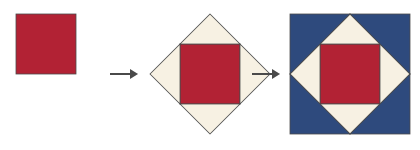
Every time you add four triangles to the sides of a square, the new square is 1.414 times bigger (the square root of 2) and turned 45 degrees. Two rounds make it exactly twice as big and square again. That's why the center of an economy block is always half the finished block, and why the unit after round 1 is never a clean ruler measurement: for an 8-inch block it's 5.66 inches finished.
Cut sizes (one block)
| Finished block | Center square | Round 1: squares cut once | Trim after round 1 | Round 2: squares cut once | Unfinished block |
|---|---|---|---|---|---|
| 4 in | 2½ in | 2 squares 2⅜ in (exact) or 2⅝ in | about 3⅜ in (3.33) | 2 squares 2⅞ in (exact) or 3¼ in | 4½ in |
| 6 in | 3½ in | 2 squares 3 in (exact) or 3¼ in | about 4¾ in (4.74) | 2 squares 3⅞ in (exact) or 4¼ in | 6½ in |
| 8 in | 4½ in | 2 squares 3¾ in (exact) or 4 in | about 6⅛ in (6.16) | 2 squares 4⅞ in (exact) or 5¼ in | 8½ in |
| 12 in | 6½ in | 2 squares 5⅛ in (exact) or 5⅜ in | about 9 in (8.99) | 2 squares 6⅞ in (exact) or 7¼ in | 12½ in |
The formulas: the center is half the block + ½ inch. The round 2 squares are half the block + ⅞ inch (exact). The round 1 squares are the block ÷ 2.828 + ⅞ inch, which never lands on a ruler line, so the chart rounds them up to the next ⅛ inch; the larger "to trim" sizes add ¼ inch more. Cut each pair of squares once on the diagonal for four triangles. Those sizes match our square in a square calculator, which also handles other sizes and a single round, and they were checked by calculation.
The "trim after round 1" size is a guide only. Trim to the points, not the number: leave exactly ¼ inch beyond each corner of the center square.
Cutting the triangles from squares cut once puts straight grain on the outside edges of each round. That's the right choice here, because round 2's outer edges become the edges of the block.
Piecing steps
- Fold the center square in half both ways and finger-press to mark the middle of each side. Fold each round 1 triangle in half along its long edge and crease the middle too.
- Sew a triangle to two opposite sides of the center, matching the creases. The triangle tips stick out past the center at both ends; that's correct. Press toward the triangles.
- Sew triangles to the other two sides the same way. Press toward the triangles.
- Trim the unit square, leaving ¼ inch beyond each corner of the center. Each side of the new unit has one corner of the center square at its middle: put the ruler's ¼-inch line on that corner, with the ruler's edge running along that side, and trim. Repeat on all four sides. The unit should measure about the size in the chart.
- Round 2: crease the triangles, sew them to opposite sides of the round 1 unit, matching the creases to its corners (the points of the center square sit on the creases), press out, then the other two sides.
- Trim the block to the unfinished size (4½, 6½, 8½ or 12½ inches), leaving ¼ inch beyond the corners of the round 1 square.
A single round: square in a square
Stop after one round and you have a square in a square, a common unit in its own right (the storm at sea uses two sizes of it). For one round in a whole-inch size, the stitch-and-flip method is exact and easy: cut a base square the finished unit + ½ inch in the center fabric and four corner squares half the finished unit + ½ inch. Sew a corner square diagonally across each corner, trim the excess ¼ inch beyond the seam and press out. For a 4-inch unit that's a 4½-inch base and four 2½-inch corners.
Fussy cutting the center
Because the center is a plain square, it can be cut around a motif: a flower, a printed star, a section of a child's drawing printed on fabric. Make a window template the size of the cut center from clear plastic or paper, move it over the print until the motif sits where you want it with ¼ inch of margin. Trace around it and cut. In a memory quilt the center can be a pocket logo or a small print from a loved one's shirt, framed by two rounds of solid.
Common mistakes and fixes
| Problem | Cause | Fix |
|---|---|---|
| Center points cut off | Round 1 unit trimmed to a number instead of to the points | Trim with ¼ inch beyond each corner of the center |
| Center not centered | Triangles sewn off-middle | Crease the middles and match them before sewing |
| Wavy block edges | Triangles cut on both diagonals, putting bias outside | Cut the squares once on the diagonal |
| Round 2 triangles too small to trim | Exact sizes used with a slightly wide seam | Use the "to trim" sizes |
Quilts made from economy blocks
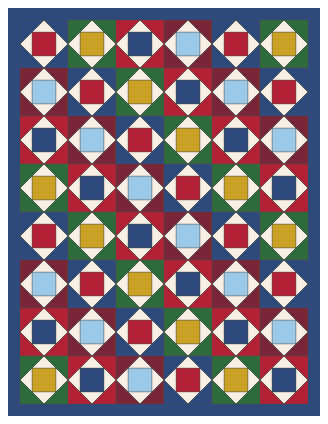
Set side by side, the outer triangles of four blocks meet into a square on point, so the quilt shows a second grid of diamonds between the centers. Changing only the center and round 2 colors from block to block, with the same round 1 background throughout, keeps a scrappy economy quilt from looking chaotic. A charm square cut down is enough for a center up to 4½ inches, which means an 8-inch block.
Related blocks
The economy center is the starting point for the snail's trail, which keeps adding rounds with the triangles split between two colors. The courthouse steps also grows from the center out, with strips instead of triangles. For other sizes use the square in a square calculator or the half-square triangle calculator (for the triangle squares), and browse everything in the quilt block library.
You might also like
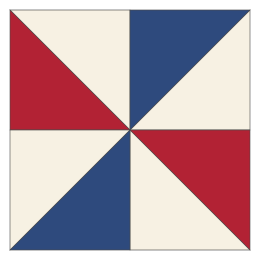 Pinwheel quilt blockFour half-square triangles turned around the center, cut for 4, 6, 8, 10 and 12 inch blocks.
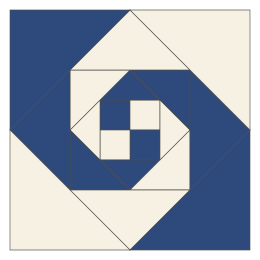 Snail's trail quilt blockA four-patch and four rounds of two-color triangles that spiral out, cut for 8, 12 and 16 inch blocks.
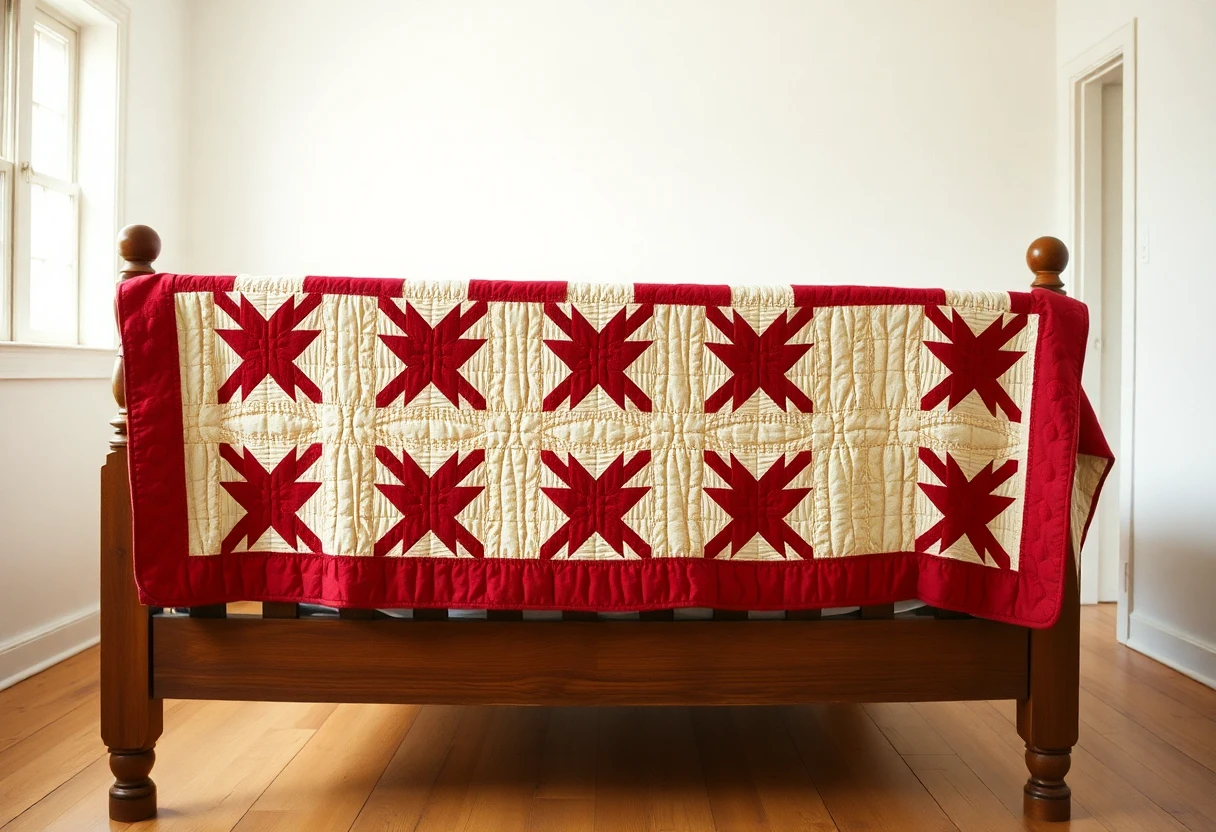 Ohio star quilt blockAn eight-point star from quarter-square triangles, cut for 6, 9 and 12 inch blocks.
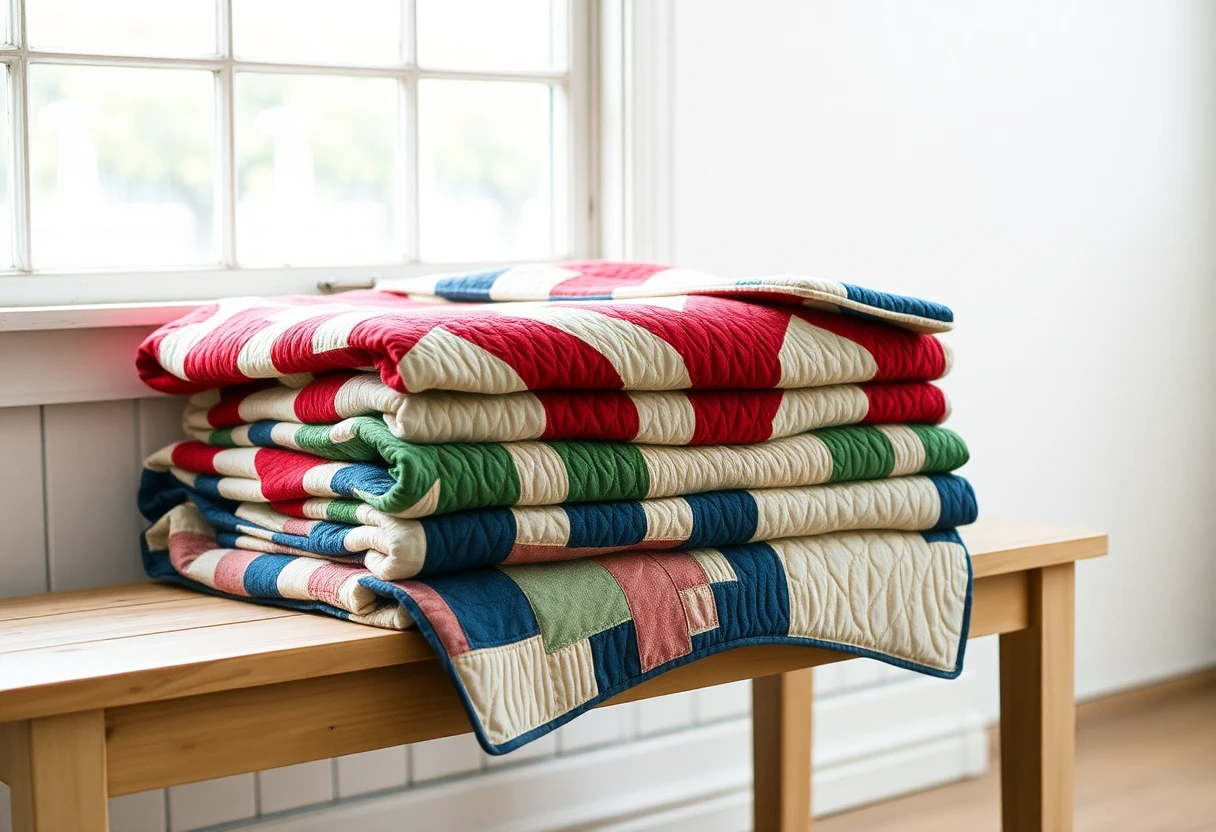 Churn dash quilt blockHalf-square triangle corners and two-strip bars, cut for 6, 9 and 12 inch blocks.