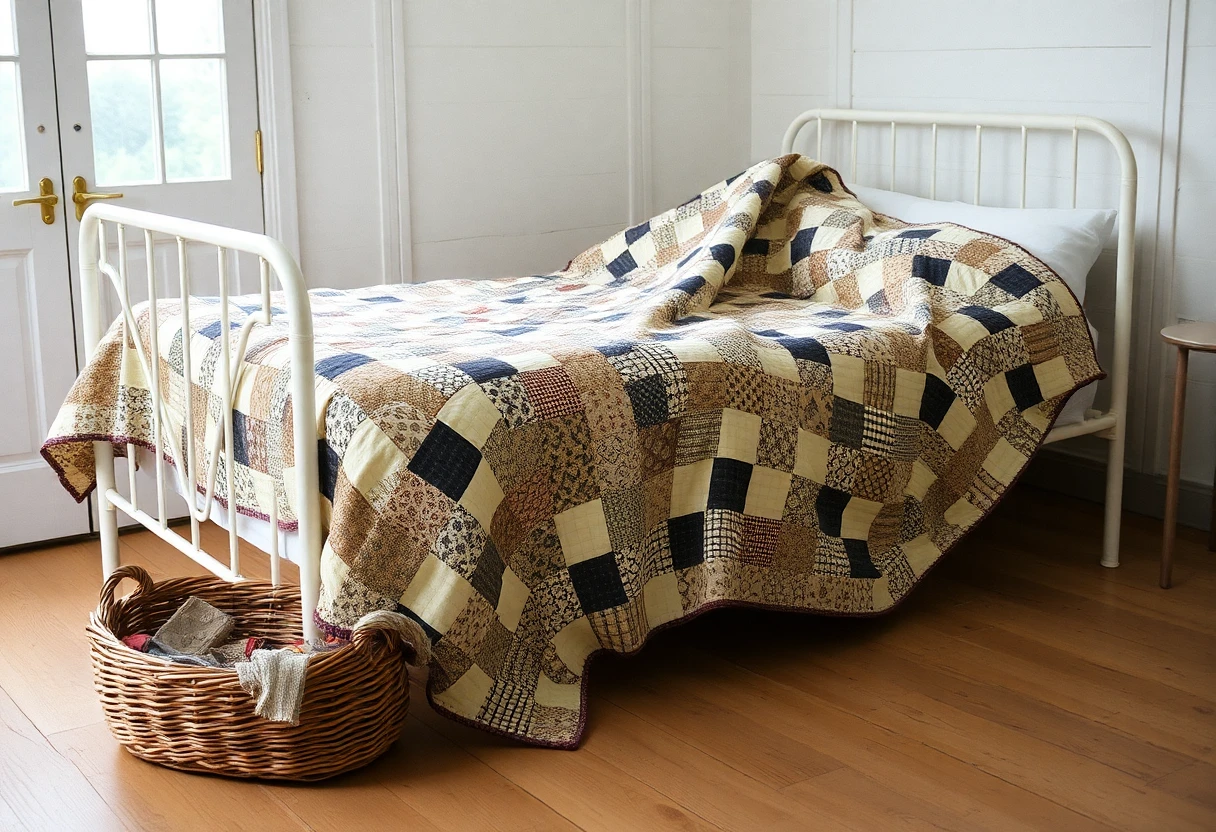
Sort the scraps first
The checkerboard only works if every square is clearly a light or a dark. Sorting is the step that decides how the quilt looks, so spend an evening on it before cutting.
- Make two piles: lights (cream, white, pale pastels, light backgrounds with small prints) and darks (navy, red, deep green, brown, black, strong mediums). Ignore color and print; only value counts.
- The leftovers that won't go in either pile are mediums. Hold each one next to your lightest dark and your darkest light. If you can't decide, leave it out. A pile of mediums is better saved for another quilt than forced into this one, where it will look like a hole in the checkerboard.
- Check a doubtful pile with your phone's camera in black-and-white mode. Lights should all read pale gray or white, darks a solid gray or black.
- Press the scraps and cut every one that is at least 2½ inches wide into 2½-inch strips, as long as the scrap allows. Store the strips by length: 40-inch strips, 20-inch strips (from fat quarters) and shorter. Pieces under 2½ inches long go to someone else's project.
You need about 540 squares of each value. In strips, that is 36 lights and 36 darks cut across the full width of fabric, or 78 of each at 20 inches, or any mix. As yardage it is about 2⅝ yd of lights and 2⅝ yd of darks in total. A jelly roll strip is exactly 2½ inches wide, so leftover jelly roll strips drop right in.
Fabric
| Fabric | Used for | Amount |
|---|---|---|
| Light scraps | 540 squares (in strip sets) | About 2⅝ yd total |
| Dark scraps | 540 squares (in strip sets) | About 2⅝ yd total |
| Binding | Seven 2½-in strips | ⅝ yd |
| Backing | Two 80-in lengths, seamed | 4½ yd |
| Batting | At least 68 × 80 in | Twin size (72 × 90 in) |
The strip-set shortcut
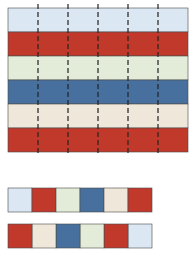
- Pick six strips of the same length: light, dark, light, dark, light, dark. Mix the prints; avoid two strips of the same fabric in one set.
- Sew them together along the long edges with ¼-inch seams. Press every seam toward the dark strip. The set measures 12½ inches wide.
- Trim one end straight and crosscut 2½-inch segments. A 40-inch set gives 15 segments and a 20-inch set gives 7. Each segment is a row of six squares, light to dark.
- You need 180 segments: 12 full-width sets, or 26 sets of 20-inch strips, or any combination.
The same strips appear side by side in every segment from one set, so when you lay out the rows, spread segments from one set around the quilt instead of keeping them together. Toss all the segments in a box and draw at random.
Sew the rows
- Odd rows: sew 5 segments end to end, each starting with a light square. The row reads light, dark, light, dark, and so on for 30 squares (60½ inches).
- Even rows: flip each segment end for end so it starts with a dark square, and sew 5 together. Make 18 odd rows and 18 even rows.
- Press the seams that join the segments toward the dark square, the same as the seams inside them. Because the rows alternate, every seam in an odd row now points the opposite way from the seam beside it in the even row, and they nest without re-pressing. That is the main reason to press to the dark.
- Join the rows in pairs (odd plus even), then pairs into fours, and so on. Pin at every few seams. Sewing long rows in pairs keeps the top from stretching and makes it easier to catch a mistake.
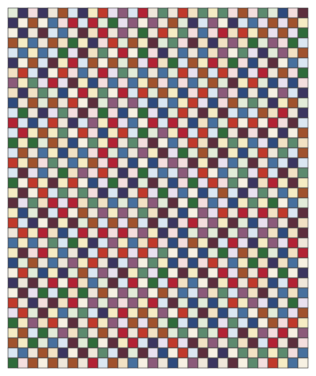
- The top measures 60½ × 72½ inches. With more than 1,000 seam intersections, small errors add up; measure it in three places each way and square it up if the sides differ.
Finish
Seam the backing lengths along the long edges for a backing about 79½ × 80 inches. Baste carefully; a quilt with this many seams is heavier than it looks. Quilting diagonally through the squares, corner to corner, gives a crosshatch that follows the checkerboard and needs no marking: just follow the seam intersections. An allover meander hides any corners that didn't quite meet. Bind with seven 2½-inch strips (perimeter 264 inches; seven strips joined give about 277). A scrappy binding of leftover 2½-inch strips suits this quilt well.
Other sizes
Every size uses whole six-square segments, so the number of squares across is always a multiple of six.
| Squares | Total squares | Segments | Finished |
|---|---|---|---|
| 18 × 24 | 432 | 72 | 36 × 48 in (baby) |
| 30 × 36 (this pattern) | 1,080 | 180 | 60 × 72 in (throw) |
| 36 × 42 | 1,512 | 252 | 72 × 84 in (twin) |
| 42 × 48 | 2,016 | 336 | 84 × 96 in (queen) |
A 40-inch strip set gives 15 segments, so divide the segment count by 15 for the number of full-width sets (each uses 3 light and 3 dark strips). For backing and binding at other sizes, try StitchTested's binding and backing calculator.
A postage stamp quilt is a good way to keep a whole family's sewing history in one place: scraps from baby clothes, old shirts and earlier quilts all become squares. If that idea appeals, our memory quilt from clothes guide covers preparing garment fabric. For a scrap quilt with bigger pieces, see the fat quarter brick quilt. The trip around the world uses the same 2-inch squares in planned rings instead of a checkerboard.
More free patterns: see them all. This pattern is free for personal and charity use; please don't sell the pattern itself.
You might also like
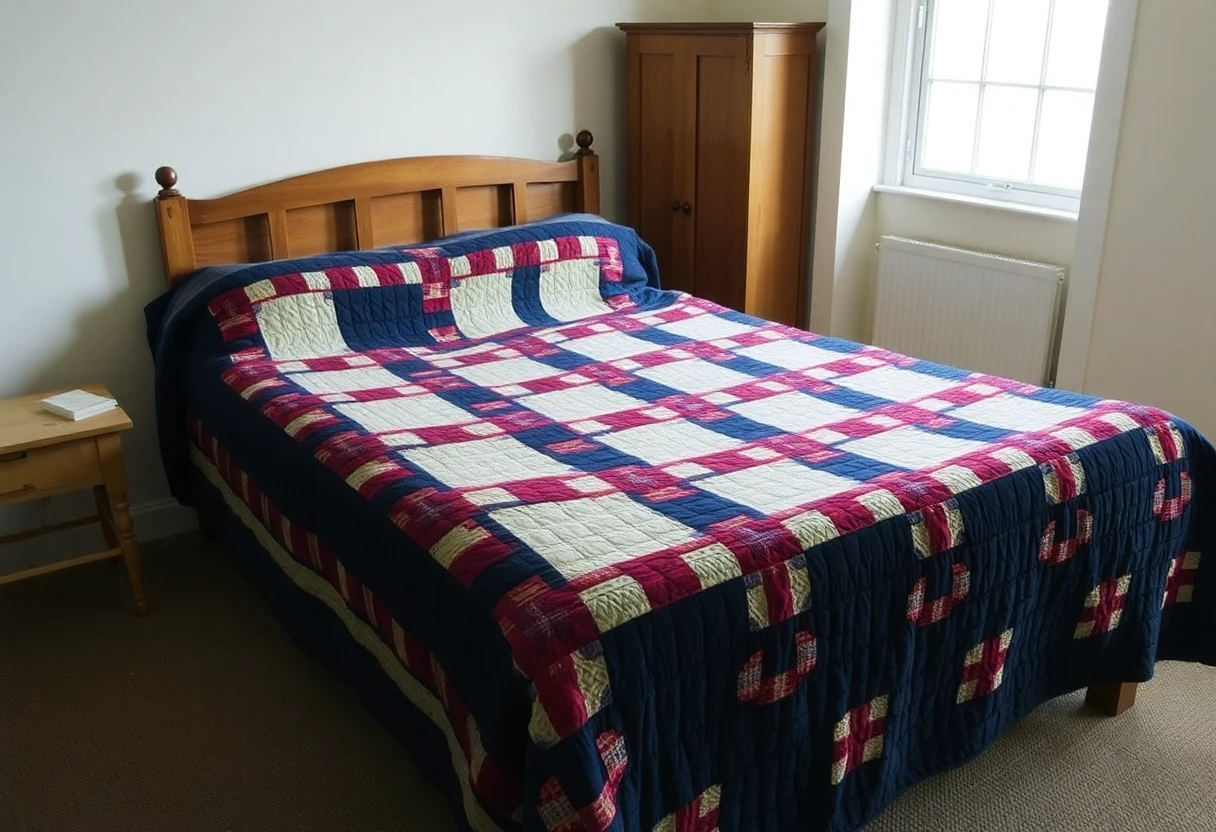 Double Irish chain quiltNavy and red chains on cream, 58 x 78 in, strip pieced so there are no tiny squares to cut one by one.
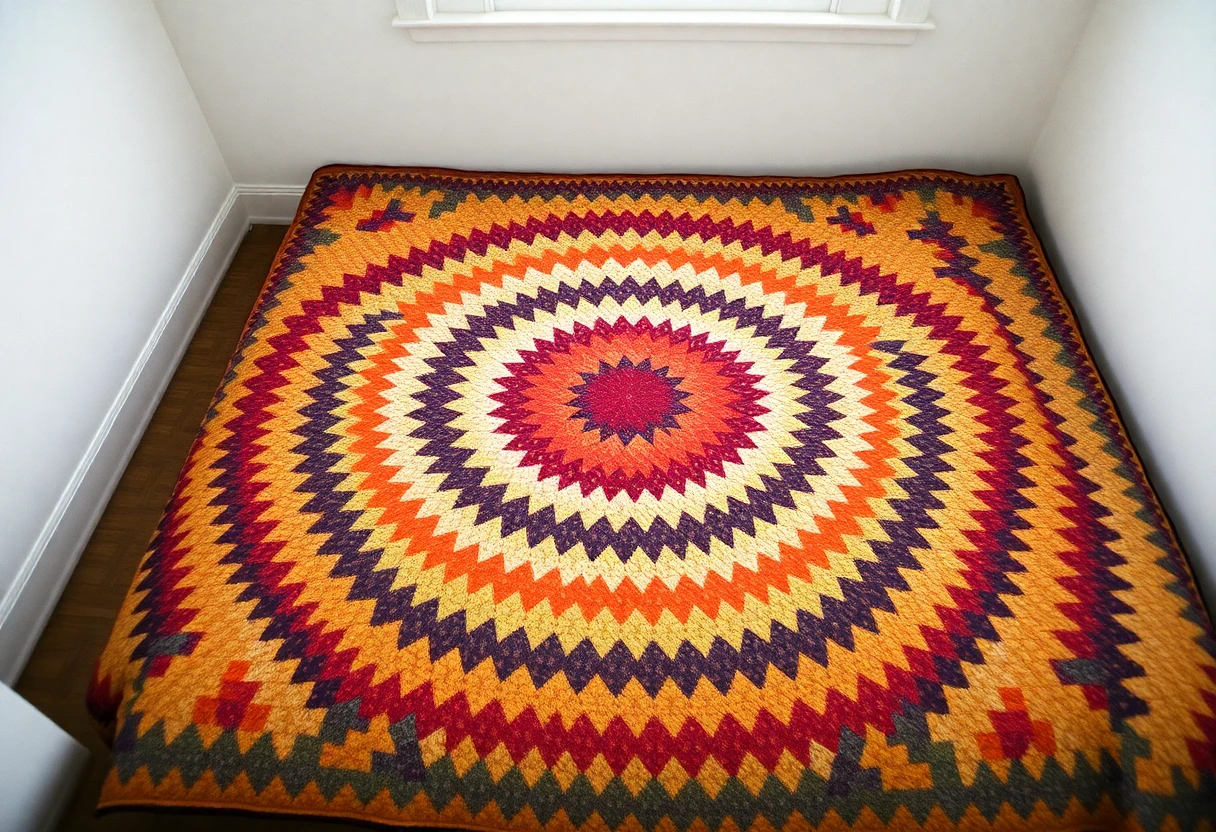 Trip around the world quiltRings of color spreading out from the center, sewn from strip-set tubes instead of a thousand single squares; 71 in square.
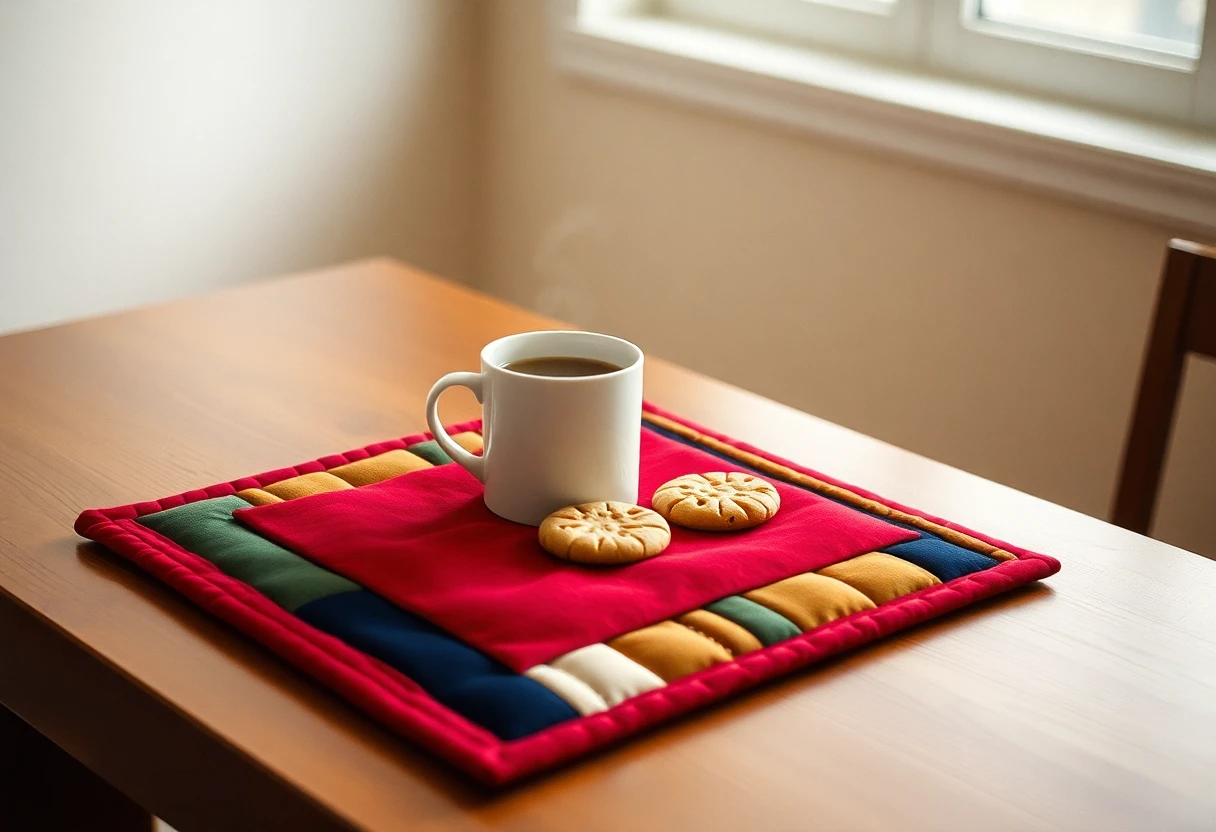 Mug rug from scrapsA 6 x 10 in quilted mat with a square for the mug and four scrap strips, in three sizes.
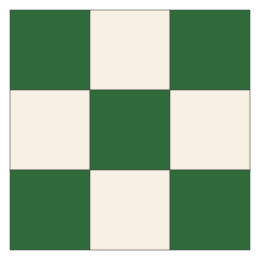 Single Irish chain quilt blockNine-patches alternating with plain squares so the dark squares link into diagonal chains.