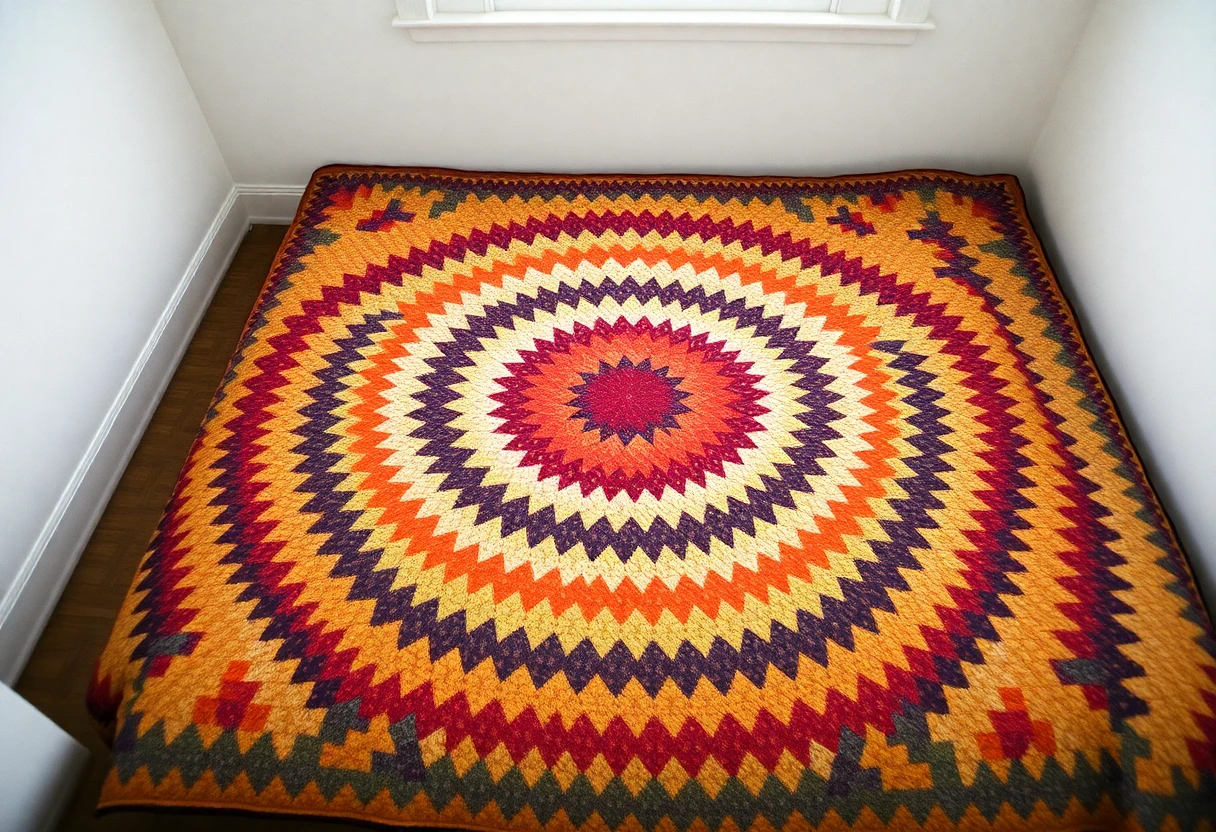
How it is built
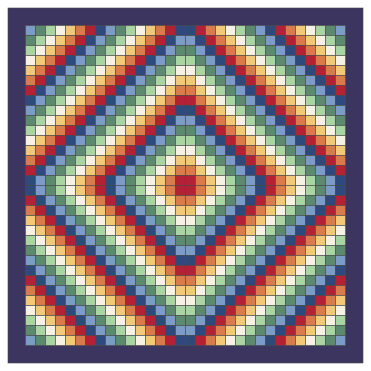
The quilt is four identical quarters. In each quarter, the row nearest the center starts with fabric 1, the next row starts with fabric 2, then 3, and so on; after fabric 8 the order starts over at 1. Each row is 16 squares long and runs through the eight fabrics twice. When the four quarters are turned so their fabric 1 corners meet in the middle, the rows line up into diamonds.
Because every row is the same sequence just shifted by one square, a single tube of eight strips holds every row you need. You only choose where to open it.
Choosing eight fabrics
Number your fabrics 1 to 8 in the order they'll appear from the center out. Fabric 8 sits next to fabric 1 every time the sequence repeats, so think of the order as a circle. A smooth run from light to dark has one hard jump where dark 8 meets light 1; that jump makes a crisp outline on every second ring, which many quilters like. For softer rings, go light to dark and back (for example cream, gold, orange, red, then blue, green, pale green, pale blue). Solids or prints that read as solids give the clearest diamonds. Busy prints blur them.
Fabric
| Fabric | Used for | Yardage |
|---|---|---|
| Fabrics 1 to 8 | Nine 2½-in strips of each | ¾ yd each (6 yd total) |
| Border | Seven 4-in strips | ⅞ yd |
| Binding | Eight 2½-in strips | ⅝ yd |
| Backing | Two 79-in lengths, seamed | 4½ yd |
| Batting | At least 79 × 79 in | Full size (81 × 96 in) or larger |
Cutting
- From each of fabrics 1 to 8, cut 9 strips 2½ inches × the width of the fabric (72 strips).
- From the border fabric, cut 7 strips 4 inches × the width of the fabric.
- From the binding fabric, cut 8 strips 2½ inches × the width of the fabric.
A 6 × 24-inch ruler is the right tool here: the 24-inch length crosses a full folded strip, and you'll make 72 strip cuts and about 130 loop cuts.
Make the tubes
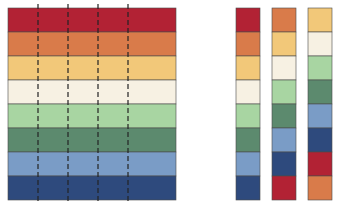
- Sew one strip of each fabric together along the long edges in order, 1 to 8, with ¼-inch seams. Stagger the strip ends by about an inch as you go, so the set doesn't drift into a curve.
- Press all seams in one direction.
- Fold the set with right sides together and sew the long edge of strip 8 to the long edge of strip 1. You now have a tube 16 inches around (finished).
- Make 9 tubes.
- Lay a tube flat on the mat with the seams running left to right. Trim one end straight, then cut loops 2½ inches wide, cutting through both layers. Each tube gives 15 loops. You need 128, and 9 tubes give 135.
Open the loops and build a quarter
Each quarter has 16 rows. Each row is two loops opened at the same seam and sewn end to end, so it runs through all eight fabrics twice (16 squares, 32½ inches long).
- Row 1 (nearest the center) starts with fabric 1. Unpick the seam between fabric 8 and fabric 1 in two loops. Each opened loop reads 1, 2, 3, 4, 5, 6, 7, 8. Sew the two together, 8 to 1, into a 16-square strip.
- Row 2 starts with fabric 2: unpick the seam between 1 and 2. Row 3 starts with fabric 3: unpick between 2 and 3. Continue to row 8, which starts with fabric 8.
- Rows 9 to 16 repeat rows 1 to 8: row 9 starts with fabric 1, row 16 with fabric 8.
- Re-press the seams in every even row in the opposite direction from the odd rows. The squares in neighboring rows line up exactly, so opposite seams nest and the corners match.
- Stack the rows in order, row 1 at the top, with fabric 1 of row 1 at the upper left corner. Check that each fabric steps down one row as it moves one square to the left; that diagonal is what becomes the diamond. Sew the rows together. The quarter measures 32½ inches square.
- Make 4 identical quarters.
Use a seam ripper or small scissors to unpick, and pull only a few stitches past the seam: the neighboring stitches hold the cut ends. Label each row with a scrap of paper pinned at the fabric 1 end as you go. Sixty-four rows look alike from across the room.
Join the quarters
- Lay out the four quarters so their fabric 1 corners meet in the middle. The upper left quarter is turned half way around from the lower right; the other two are turned a quarter turn. The center should be four squares of fabric 1.
- Sew the top two quarters together, then the bottom two, then join the halves, matching seams at every row. The center measures 64½ inches square.
- Join the border strips end to end. Cut two side borders 64½ inches long and sew them on; then cut top and bottom borders 71½ inches and sew them on. Measure your own top first and use your numbers if they differ (how to add borders).
Finish
Seam the two 79-inch backing lengths along the long edges for a backing about 79½ × 79 inches. Layer, baste and quilt. Diagonal lines through the squares follow the rings and are easy to plan, since every square is 2 inches; a 2-inch crosshatch through the corners of the squares is classic. Bind with the eight 2½-inch strips (perimeter 284 inches; the joined strips give about 316).
Other sizes
Keep the same eight fabrics, 128 loops and 32 × 32 layout, and change the strip width. The border here stays 3½ inches.
| Strip width (cut) | Square (finished) | Loops per tube | Tubes | Each fabric | Finished quilt |
|---|---|---|---|---|---|
| 2 in | 1½ in | 19 | 7 | ½ yd | 55 × 55 in |
| 2½ in (this pattern) | 2 in | 15 | 9 | ¾ yd | 71 × 71 in |
| 3 in | 2½ in | 13 | 10 | 1 yd | 87 × 87 in |
| 3½ in | 3 in | 11 | 12 | 1¼ yd | 103 × 103 in |
For the larger sizes, the backing and binding grow too; StitchTested's binding and backing calculator does the math. The double Irish chain is another all-squares quilt with a strong diagonal, and the bargello quilt uses the same tube trick with loops of different widths.
More free patterns: see them all. This pattern is free for personal and charity use; please don't sell the pattern itself.
Products on this page
Photos and prices come from Amazon and can change.
 Omnigrip 6 x 24 inch quilting rulerCheck price on Amazon
You might also like
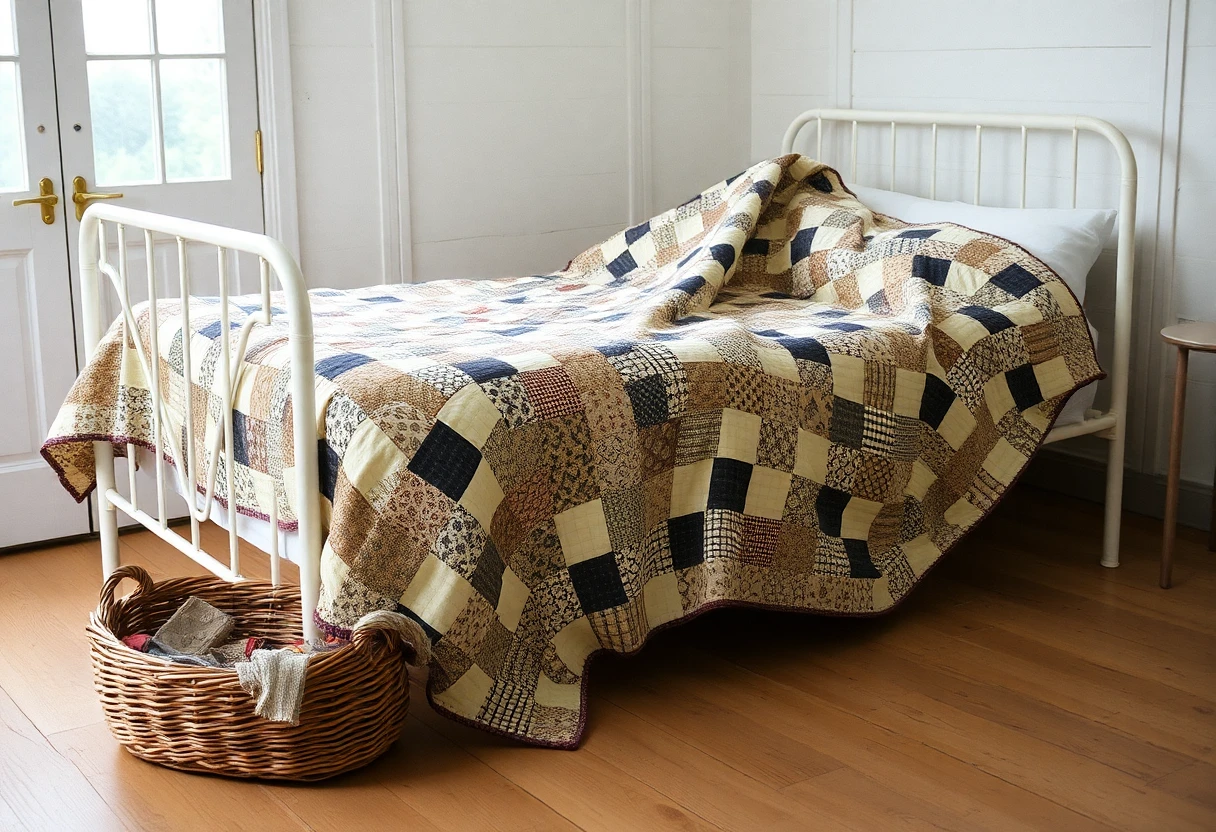 Postage stamp scrap quilt1,080 tiny squares from the scrap bin in a light and dark checkerboard, sewn in strip sets so you rarely handle a single square; 60 x 72 in.
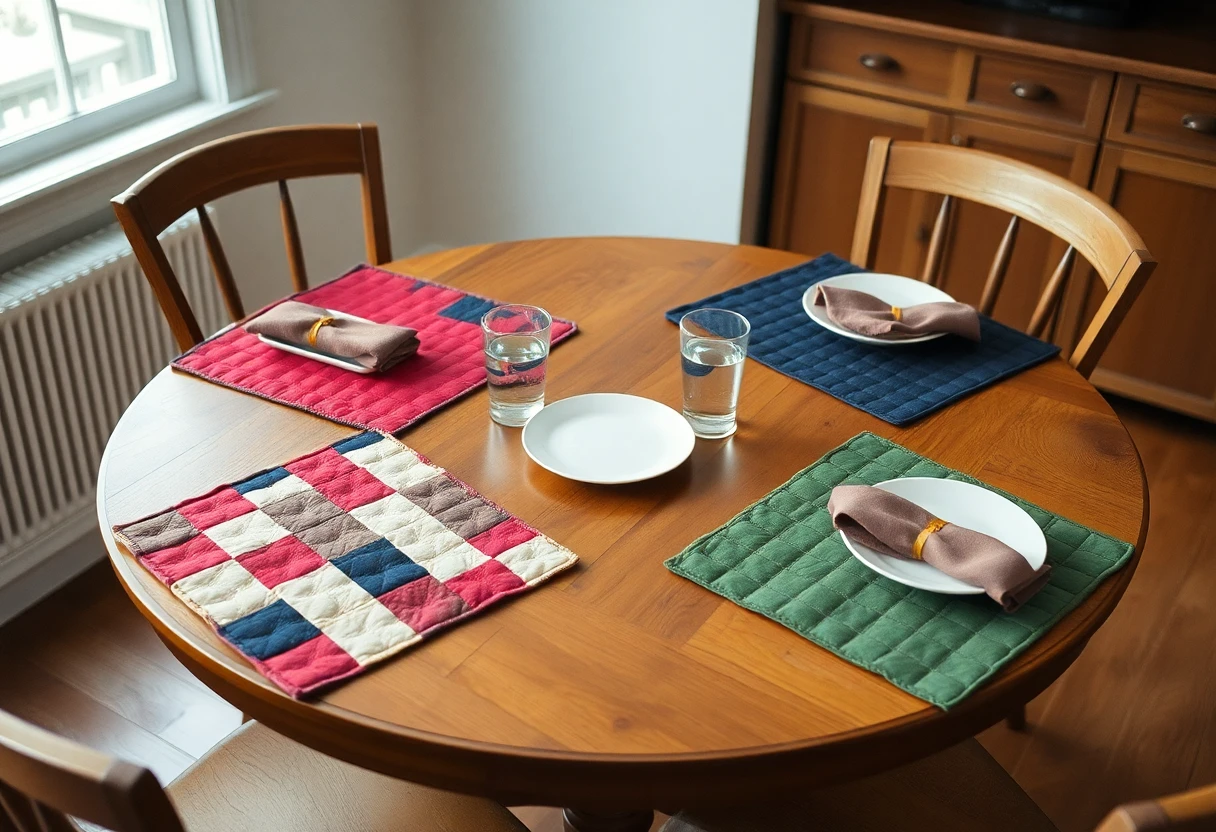 Quilted placemats (set of four)A set of four 12 x 18 in placemats with a column of squares, finished by turning instead of binding.
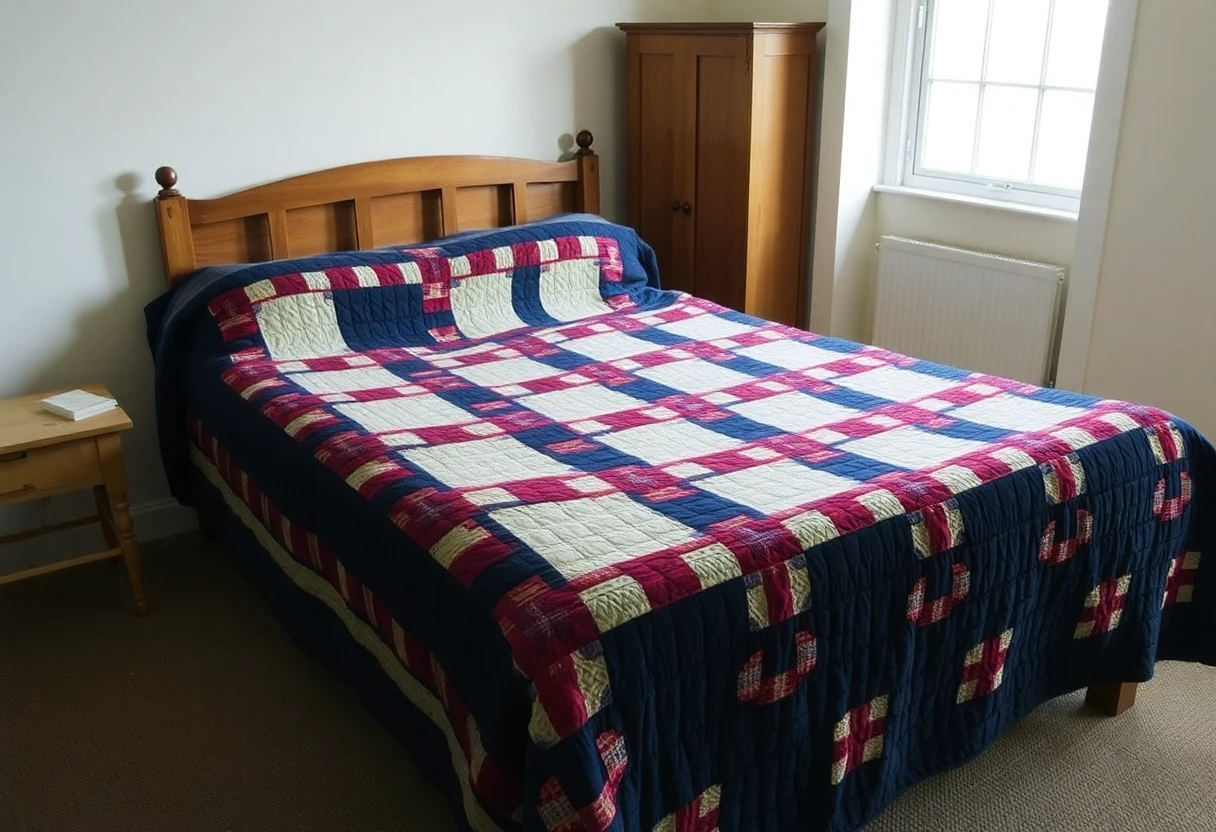 Double Irish chain quiltNavy and red chains on cream, 58 x 78 in, strip pieced so there are no tiny squares to cut one by one.
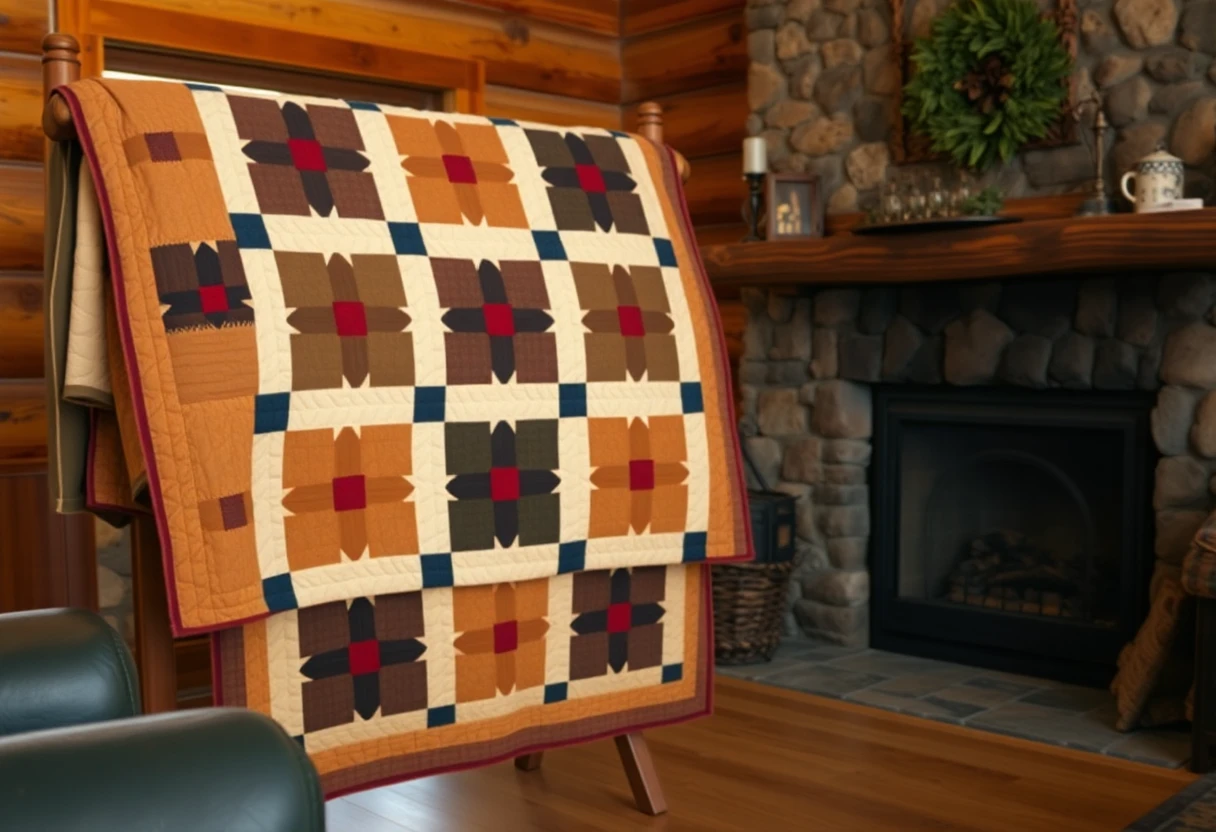 Log cabin quiltThe classic block of narrow logs around a red center, 30 blocks for a 60 x 72 in throw.