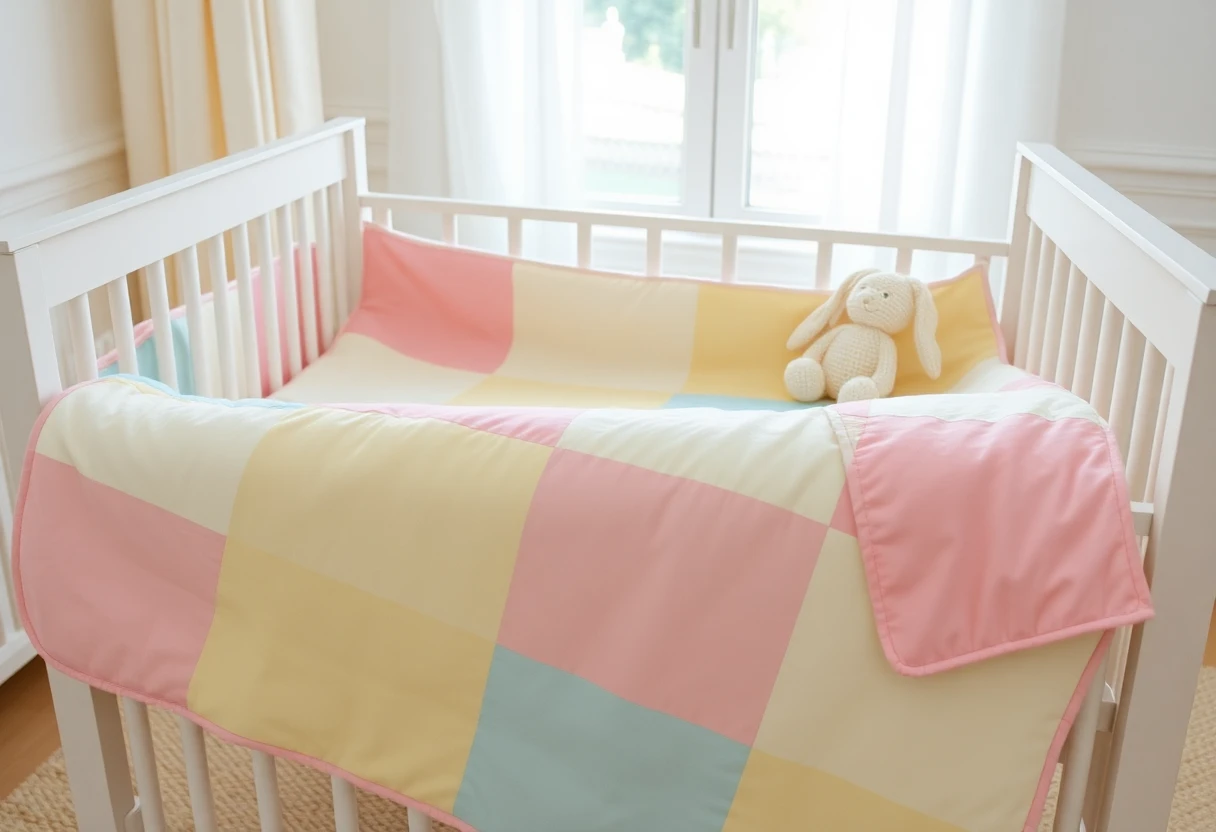
Fabric
| Fabric | Amount | Notes |
|---|---|---|
| Prints for the squares | 8 fat quarters, or 4 prints at ⅜ yd each | Each fat quarter (18 × 21 in) gives 6 squares; each ⅜-yd cut gives 12 |
| Binding | ⅜ yd | Five 2½-in strips |
| Backing | 1⅝ yd | 44-in-wide fabric, or a 45 × 56 in piece of wide flannel or minky |
| Batting | Crib size (45 × 60 in) | Cotton or 80/20 washes softest |
Fat quarters vary by a half inch or so. If yours measure under 19½ inches in one direction after squaring up, you'll get 4 squares instead of 6; buy one extra.
Picking prints for 6-inch squares
A 6-inch square shows most of a print, so this is the layout for novelty fabric: a whole duck or a whole fire truck fits in one square. Directional prints need a little care. Cut the way the cutting steps below describe, every square comes off the fat quarter the same way up, and a row of walking elephants stays upright as long as you don't spin squares around while you arrange them. Fussy cutting one motif into the center of each square is possible, but it wastes fabric between motifs, and 8 fat quarters won't stretch to 48 squares that way.
Mix in some contrast. Eight prints that are all the same pale pastel blur into one soft rectangle from across the room. One or two medium prints, a coral or a sage among the pinks and creams, give the eye somewhere to land and still look like a baby quilt. If you're not sure, the fabric value checker shows whether your prints read as light, medium or dark.
Checkerboard version
For a calmer quilt, alternate a print square with a plain one. The crib size takes 24 print squares (4 fat quarters) and 24 squares of one solid or tone-on-tone: four 6½-inch strips, which is ⅞ yd. Start row 1 with a print and row 2 with the solid so the colors alternate down the columns as well as across. The small size splits evenly at 15 and 15. The toddler size has 63 squares, an odd number, so the color in the four corners takes 32 and the other takes 31.
Cutting
From each fat quarter, cut two strips 6½ inches wide along the 21-inch side, then cut each strip into three 6½-inch squares. (From ⅜-yard cuts, cut two 6½-inch strips across the width and subcut 12 squares.) You need 48 squares in all. Cut five 2½-inch strips from the binding fabric.
Sew the top
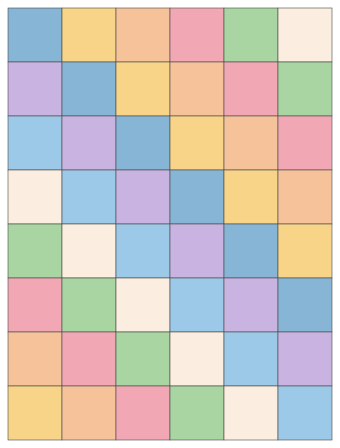
- Lay the squares out 6 across and 8 down. Spread each print around so no two of the same fabric touch, and photograph the layout before you pick it up.
- Sew each row of 6 squares with a ¼-inch seam.
- Press the seams in row 1 to the left, row 2 to the right, and keep alternating. When you join the rows, the seams nest and the corners line up without much pinning.
- Sew the rows together. The top should measure 36½ × 48½ inches.
Press the seams that join the rows all toward the bottom of the quilt. With flannel squares, press those long seams open instead. Flannel seam allowances pressed to one side stack into a noticeable ridge where the rows cross, and open seams lie flatter under a baby.
If the rows don't come out even
Each sewn row should measure 36½ inches. Measure all eight before you join them. If a row is ¼ inch or more short, look for the seam in it that's visibly wider than the rest, restitch it at ¼ inch and pick out the old stitching. Trimming the longer rows to match would make the squares at the ends narrower than the rest, and in a quilt of plain squares that shows.
If every row is short by the same amount, your seam is a little wide all the way through. The quilt will finish slightly under 36 by 48, which doesn't matter on a baby quilt.
Flannel squares grow when the iron is pushed across them, and a stretched square won't line up with its neighbors. Lift the iron and set it down instead of sliding it, and a light spray of starch before cutting keeps flannel squares square.
Quilt and finish
A diagonal grid through the squares, sewn with a walking foot, holds the layers firmly enough for constant washing. So does straight-line quilting ¼ inch from every seam. Keep the quilting lines no more than the batting package's recommended spacing apart (often 8 to 10 inches for cotton), or the batting can shift in the wash.
The grid is easy to mark because the squares do it for you. Lines sewn corner to corner through every square, in both directions, land about 4¼ inches apart. Sew only every other diagonal and the lines are about 8½ inches apart, which is still inside the limit for most cotton battings and takes half the time. Straight-line machine quilting explains how to keep long diagonal lines from drifting.
Bind by machine. Hand-finished binding is lovely, but a baby quilt gets washed often, and machine stitching holds up better. See how to bind a quilt, then add a label with the baby's name and birth date.
Baby-safe choices
- Skip buttons, beads and charms; anything sewn on can come off and become a choking hazard.
- Prewash flannel and any red or dark prints so they shrink and bleed before they're sewn next to white.
- Use a cotton or cotton-blend batting; it breathes better than all-polyester.
- A quilt is for play mats, strollers and decoration. Follow current safe-sleep guidance from your pediatrician about soft bedding in the crib.
Other sizes
| Size | Layout | Squares | Fat quarters | Finished |
|---|---|---|---|---|
| Small baby or stroller | 5 × 6 | 30 | 5 | 30 × 36 in |
| Crib (this pattern) | 6 × 8 | 48 | 8 | 36 × 48 in |
| Toddler | 7 × 9 | 63 | 11 | 42 × 54 in |
| Throw | 8 × 10 | 80 | 14 | 48 × 60 in |
Cutting the squares from yardage
A 6½-inch strip cut across 40 usable inches of fabric gives six squares. A ⅜-yd cut holds two strips, so it's the easy unit for a scrappy quilt.
| Size | Squares | 6½-in strips | As ⅜-yd cuts | All from one fabric |
|---|---|---|---|---|
| Small baby or stroller | 30 | 5 | 3 prints (36 squares) | 1 yd |
| Crib | 48 | 8 | 4 prints (48 squares) | 1½ yd |
| Toddler | 63 | 11 | 6 prints (72 squares) | 2⅛ yd |
| Throw | 80 | 14 | 7 prints (84 squares) | 2⅝ yd |
The one-fabric column allows 2 inches for straightening the first cut. The ⅜-yd plan leaves spare squares in three of the four sizes, which is handy for swapping out a square that sits badly in the layout.
Larger sizes need more binding and a bigger backing. StitchTested's binding and backing calculator works them out from the finished size.
More free patterns: see them all. This pattern is free for personal use and for charity quilts. Please don't sell the pattern itself.
You might also like
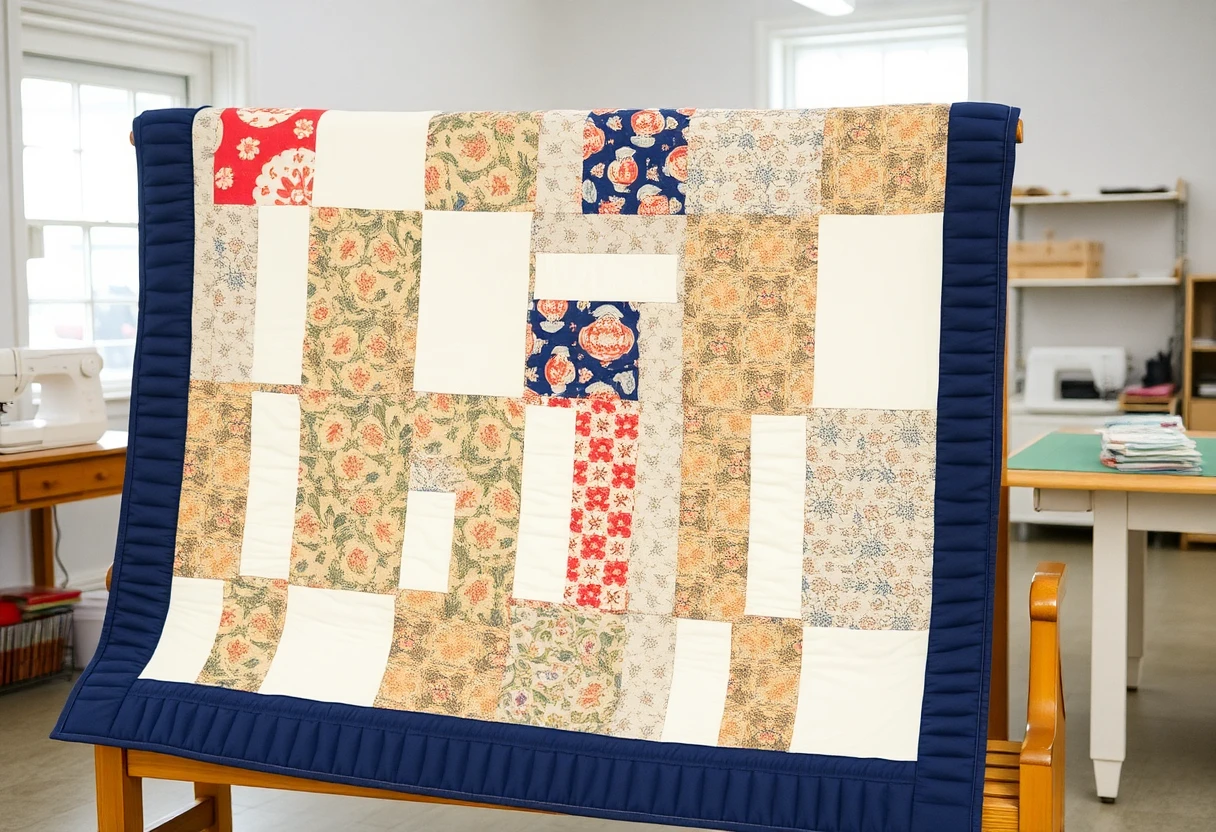 Disappearing nine-patch quiltA plain nine-patch cut in quarters and turned, which looks far harder than it is; 20 blocks from charm squares for a 62 x 75 in throw.
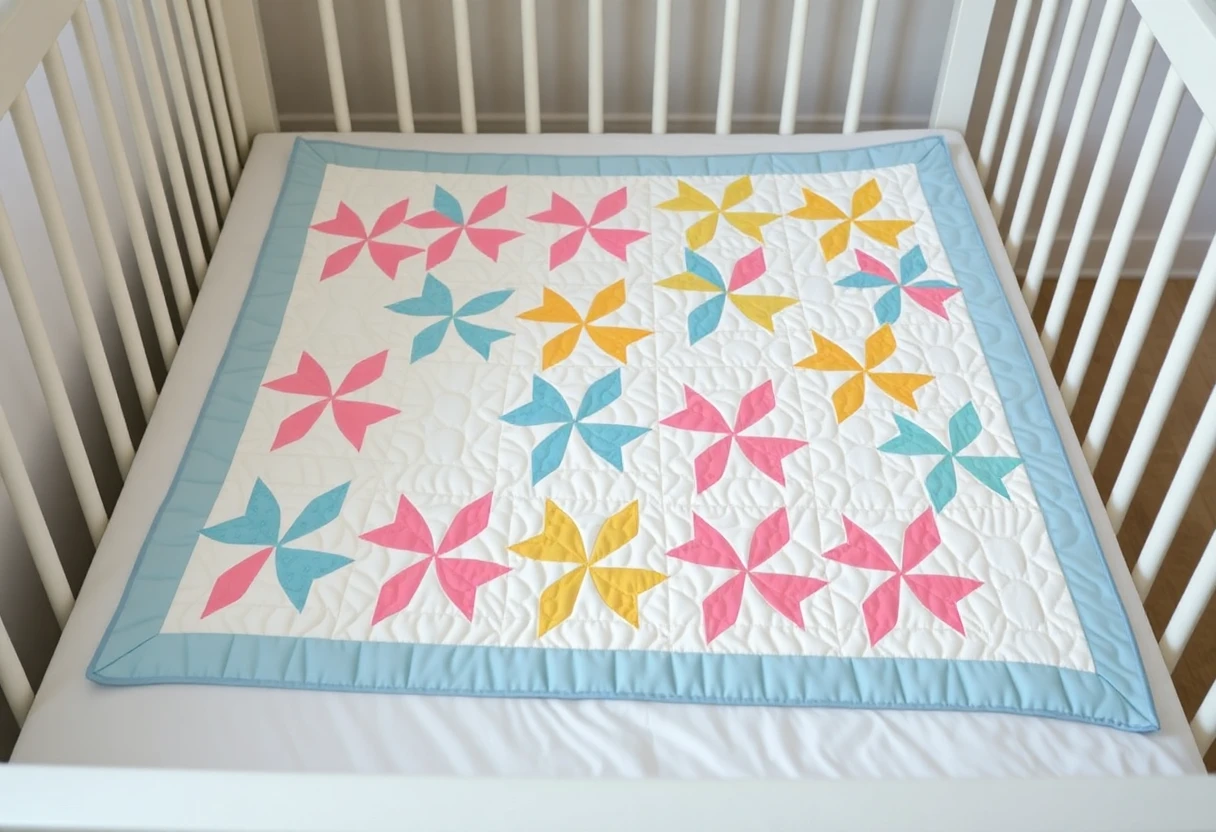 Pinwheel baby quiltOne charm pack, 20 pinwheels, 38 x 46 in, a step up from a squares-only baby quilt.
 Nine-patch throw quiltThe classic first quilt, a 53 x 71 in throw with only squares to cut and sew.
 One-layer-cake throwAll 42 squares of one layer cake plus a border, a 64 x 73 in throw in an afternoon of sewing.