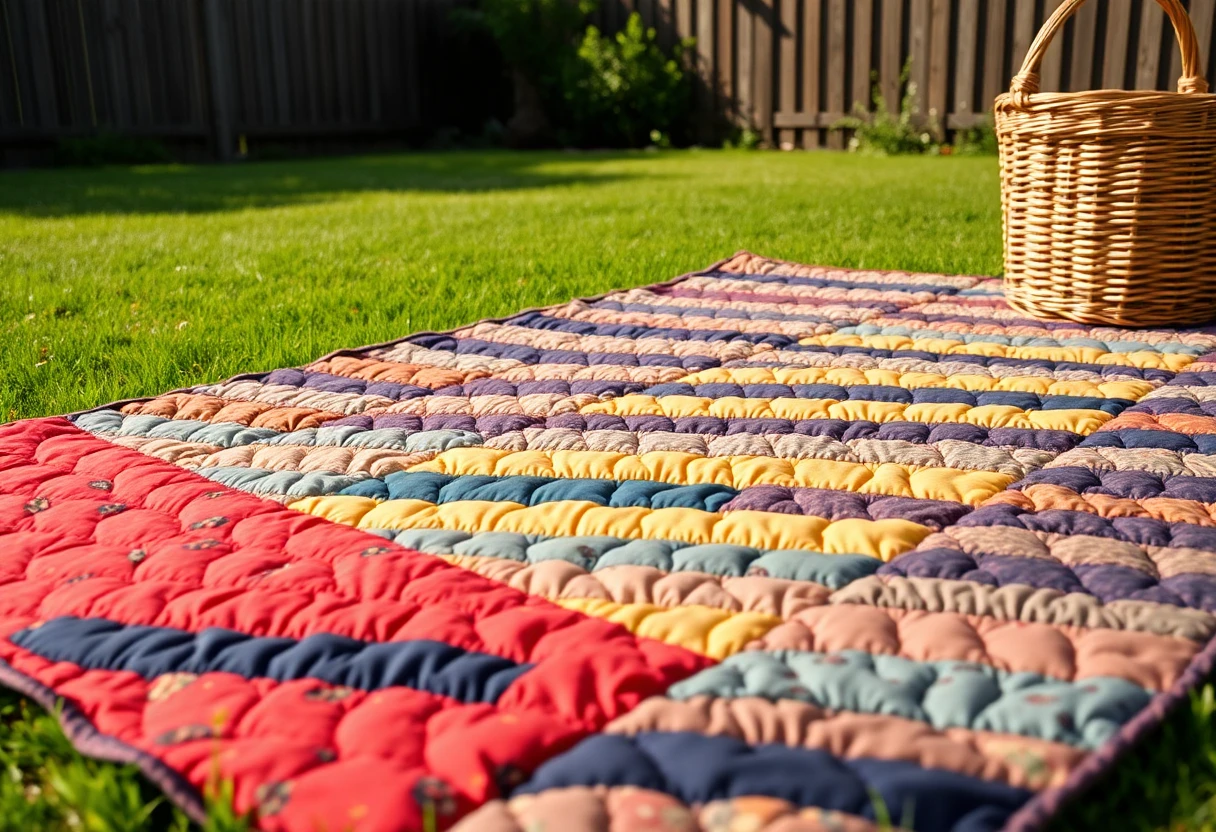
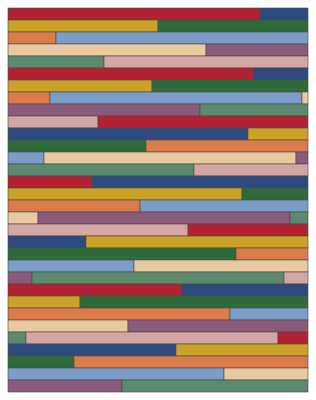
What you need
| Item | Amount |
|---|---|
| Jelly roll | 1 (40 strips, 2½ in × width of fabric) |
| Binding | ⅝ yd (seven 2½-in strips) |
| Backing | 3¼ yd |
| Batting | Twin size (72 × 90 in), or throw size at least 58 × 72 in |
No jelly roll? Cut your own
Ten fabrics at ⅜ yd each make the same 40 strips. Cut four 2½-inch strips across the width of each one; that uses 10 of the 13½ inches and leaves room to straighten the edge. With the selvages trimmed, your strips are 40 inches long, a little shorter than most precut strips, so the top comes out about 46 inches wide (see the width table below).
How it works
- Join all 40 strips end to end in random order, with diagonal seams the way you'd join binding: lay two ends right sides together at a right angle, sew corner to corner, trim to ¼ inch and press open. You'll have one strip roughly 1,600 inches long. Wind it loosely as you go so it doesn't tangle.
- Cut about 18 inches off the first end. This keeps the seams of the first two layers from lining up.
- Bring the two ends of the long strip together, right sides facing, and sew down one long edge. Keep going until you reach the fold at the far end, then cut through the fold. You now have a strip set two strips wide and about 800 inches long.
- Bring the ends of the strip set together and sew along the long edge again, cut the fold, and you have four strips wide. Do it three more times: 8, 16, then 32 strips.
- Press all the seams in one direction and trim the ends straight. The top is about 48 to 50 inches wide (the joined length, less the seams, divided by 32) and 64½ inches long.
The exact width depends on your jelly roll. Strips cut from 42-inch fabric give a slightly narrower quilt than strips cut from 44-inch fabric.
Handling a strip 120 feet long
Forty joined strips come to somewhere around 120 to 140 feet. A laundry basket behind the machine, with the strip dropped in loose loops, lets it feed off the top without knotting. The first pass is about 60 feet of seam; each pass after that is half as long, and the fifth is about 4 feet.
Which way to fold
Lay the two ends right sides together and sew along the long edge, never across the end. The fold forms wherever the halfway point falls; you don't measure for it. What matters is that the strip lies flat all the way from the needle back to the fold. If it has a half twist anywhere, everything beyond the twist gets sewn right side to wrong side, and you won't see it until you open the strip set. Before each pass, run the strip through your fingers from the ends to the fold. If you do find a section sewn wrong side out later, unpick from the twist to the fold, flatten the strip and resew.
From the second pass on, line up the raw long edges of the strip set, not the seams inside it. The seams in the two layers won't match each other and aren't supposed to. That stagger is the whole look of the quilt.
Why the width is always "about"
The height is fixed: 32 strips at 2 inches finished is 64 inches, 64½ with the outer seam allowances. The width is whatever length is left after the joins, divided by 32, and three things move it. Jelly roll strips are cut selvage to selvage, so their length depends on the fabric. Trimming stiff or printed selvages takes the length down to about 40 inches. And each diagonal join uses up about 2½ to 3 inches of length.
| Strip length | Joined, after cutting 18 in off | Top width, about |
|---|---|---|
| 40 in (selvages trimmed) | 1,465 to 1,485 in | 46 in |
| 42 in | 1,545 to 1,565 in | 48 to 49 in |
| 44 in | 1,625 to 1,645 in | 51 in |
Treat those widths as the most you'll get. On a seam hundreds of inches long, the presser foot pushes the top layer ahead of the bottom one a little, so the two layers rarely end evenly at the fold. Cut through the fold where it lands and trim the ragged ends square; a few inches go each time.
Tips that make it look planned
- Shuffle the strips before joining, and check that no two strips of the same print end up next to each other in the long strip.
- Sew with a slightly shorter stitch length than usual; long seams stretch less.
- Don't pull the strip as you sew. On a seam this long, a little stretch adds up to a wavy edge.
- If two seams land almost on top of each other in neighboring rows, unpick a few inches and shift one. That's the only fixing most race quilts need.
Pressing
Leave the long seams until all five passes are done; pressing after the first pass would mean ironing a strip set more than 60 feet long. Then press the top from the back a section at a time, seams in one direction, lifting the iron rather than sliding it, and finish from the front.
Make it bigger
A 4-inch border (cut 4½ inches) brings it to about 56 to 58 × 72 inches, depending on your top's width, which falls inside the size range for a Quilt of Valor if you use a patriotic jelly roll. That border takes 1 yard (seven strips), and the binding grows to eight strips; buy 3¾ yards of backing instead of 3¼. Two jelly rolls raced together make a top roughly twice as long; cut it into two quilts or add a center panel for a twin. A sixth pass on one jelly roll doesn't work: it doubles the length to 128 inches and halves the width to about 24. To go bigger from one roll, add a border.
Bordering to a target size
Measure the finished top through the middle first, because its width depends on your strips. Subtract its finished width from the width you want and halve the difference: that's the finished width of each side border. Add ½ inch to get the cut width. Do the same with the length for the top and bottom borders. The two pairs can be different widths if your target needs it; on a striped quilt it doesn't show.
For a top that measures 48½ × 64½ inches (48 × 64 finished), with the same border all around:
| Border, finished | Cut width | Strips | Border fabric | Quilt, finished |
|---|---|---|---|---|
| 4 in | 4½ in | 7 | 1 yd | 56 × 72 in |
| 6 in | 6½ in | 7 | 1⅜ yd | 60 × 76 in |
| 8 in | 8½ in | 7 | 1¾ yd | 64 × 80 in |
Seven border strips joined end to end give 280 inches; the 8-inch border needs 258 (two sides at 64½ and a top and bottom at 64½). Each of these sizes takes eight 2½-inch binding strips (⅝ yd). For the backing at the bigger sizes, use StitchTested's binding and backing calculator; for other border widths, our quilt border calculator does the strip math, and how to add borders to a quilt covers measuring and sewing them on.
Finish
Baste the layers and quilt. Straight lines along a few of the strip seams suit the stripes, and so does an all-over wave. Then bind it with seven 2½-inch strips.
The strips give you guide lines for free. Stitching in the ditch of every other seam, with a walking foot, puts lines 4 inches apart: 15 or 16 lines, each the width of the quilt. They disappear into the seams and leave the stripes clean. Lines that cross the strips, straight down or on a diagonal, show more, but they also run through the end-to-end joins scattered across the top and hold them flat. Straight-line machine quilting covers spacing and keeping long lines straight.
More free patterns: see them all. This pattern is free for personal and charity use; please don't sell the pattern itself.
You might also like
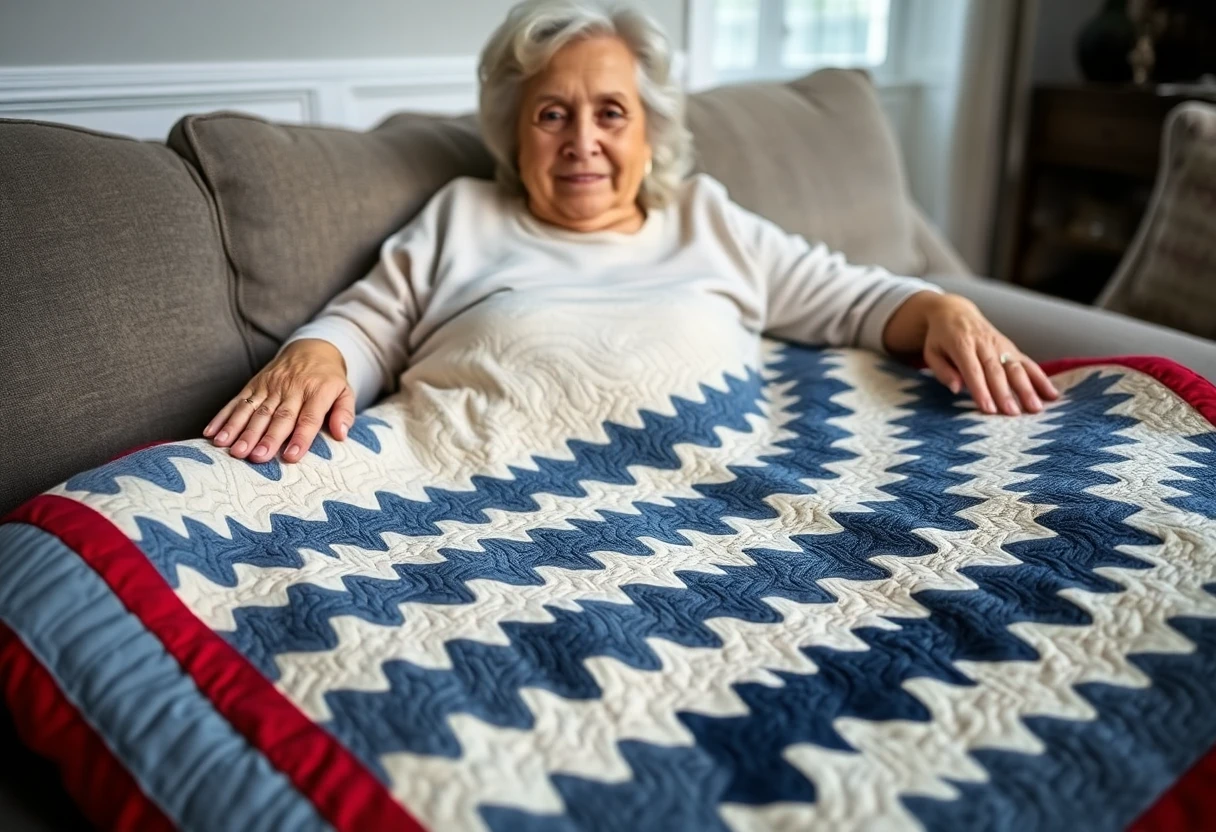 Rail fence quiltThree strips sewn together and turned every other block, a zigzag throw of 58 x 70 in that works from a jelly roll.
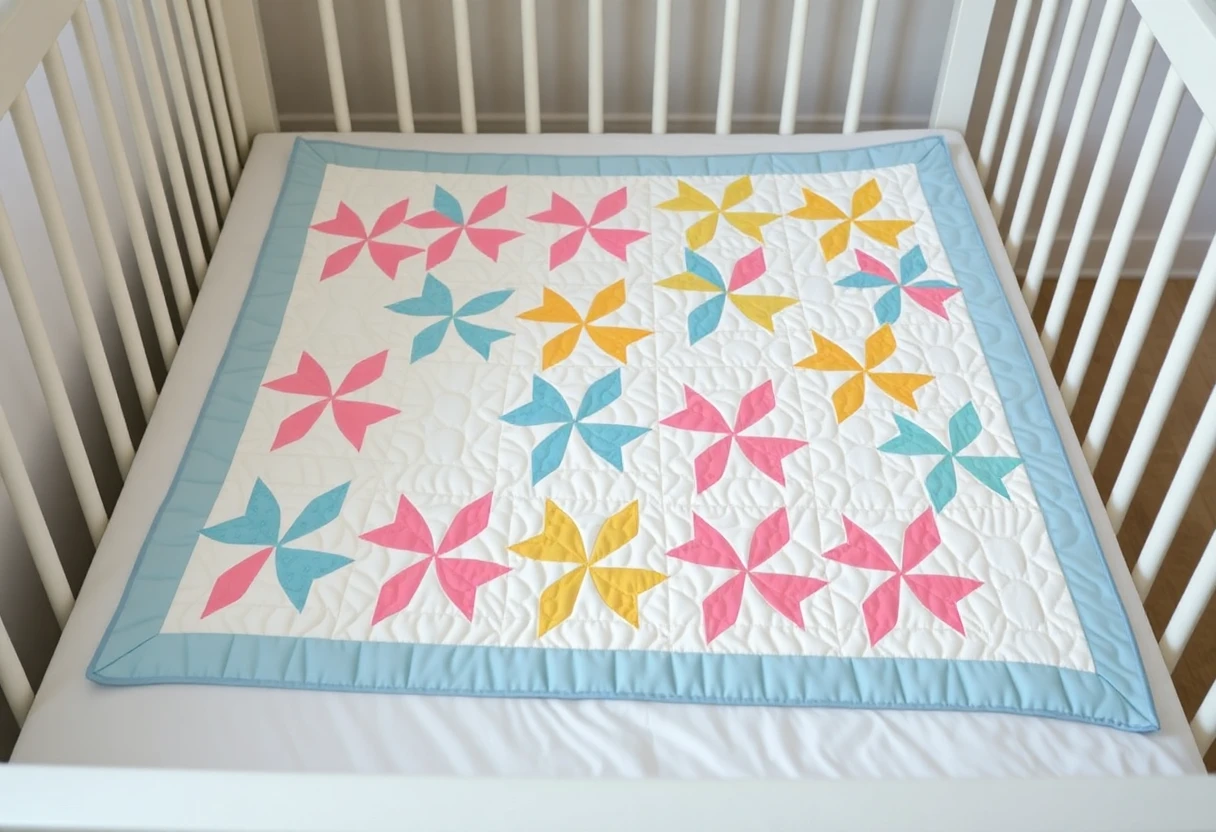 Pinwheel baby quiltOne charm pack, 20 pinwheels, 38 x 46 in, a step up from a squares-only baby quilt.
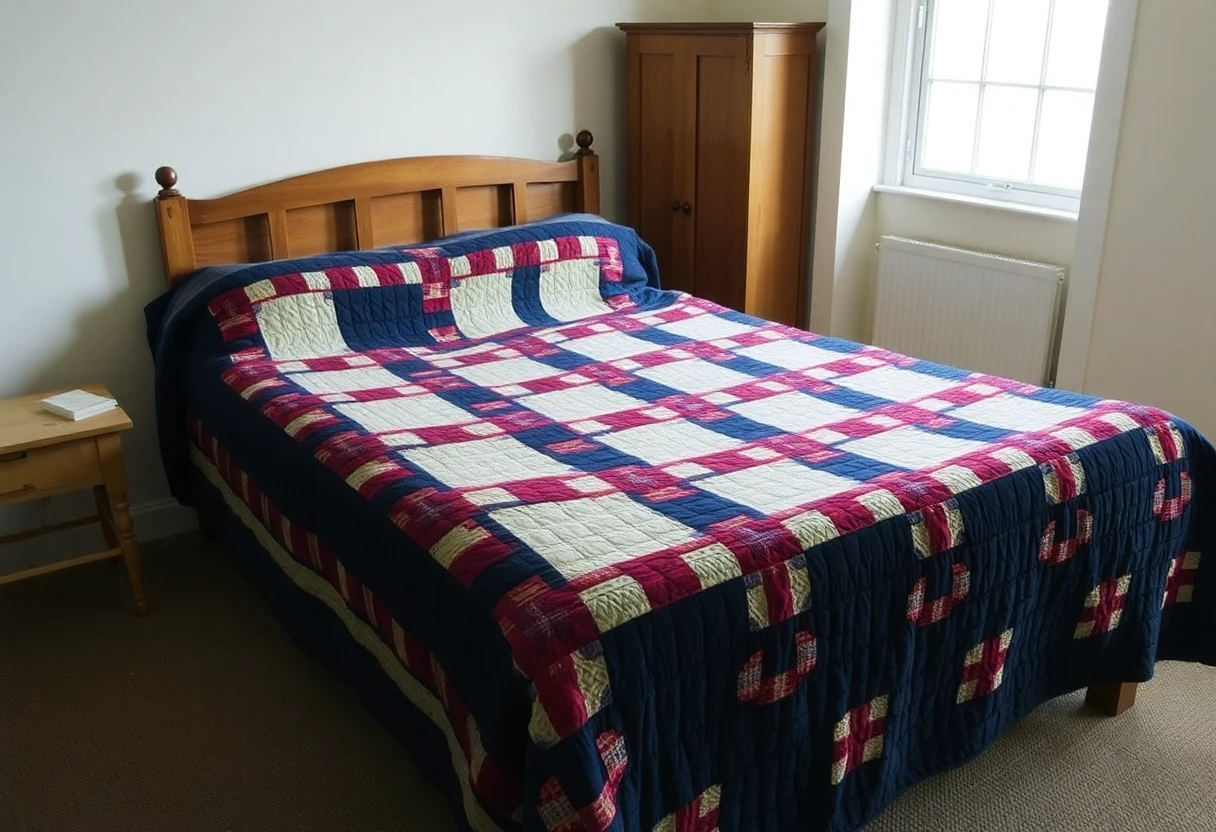 Double Irish chain quiltNavy and red chains on cream, 58 x 78 in, strip pieced so there are no tiny squares to cut one by one.
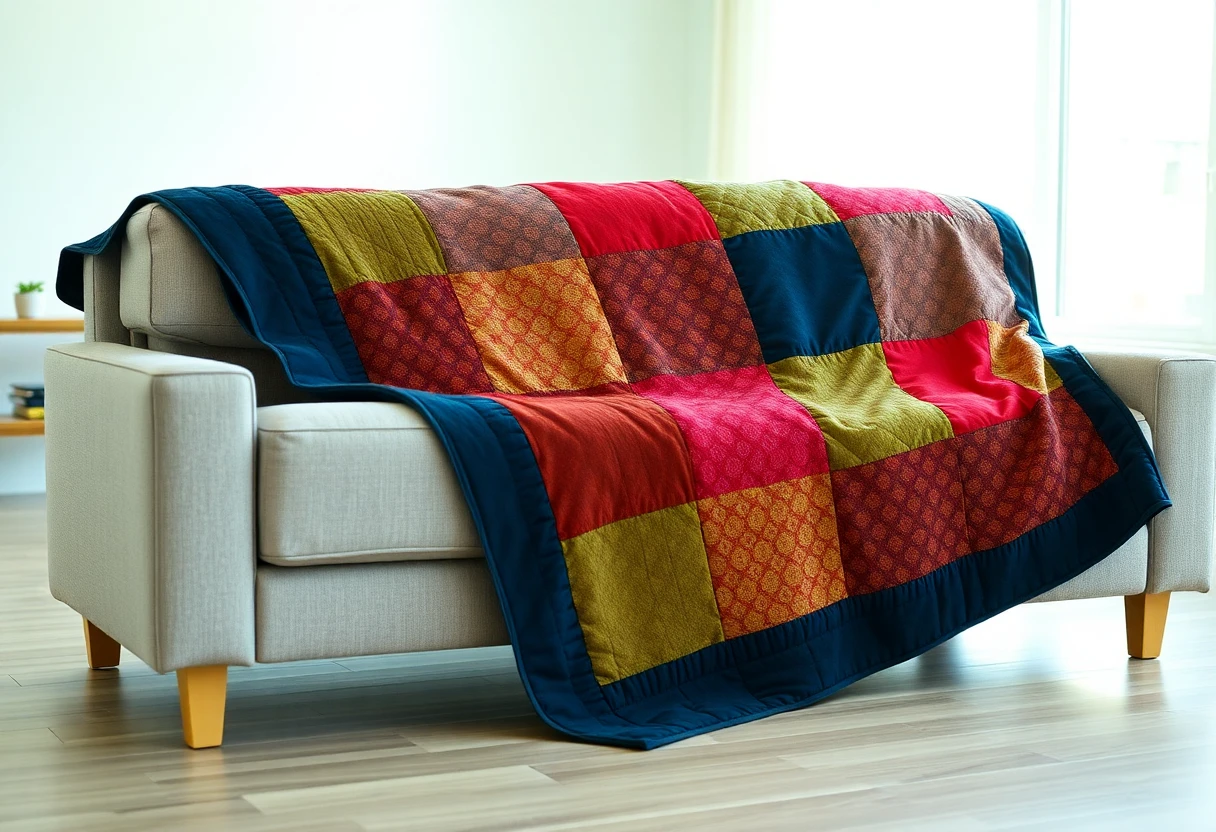 One-layer-cake throwAll 42 squares of one layer cake plus a border, a 64 x 73 in throw in an afternoon of sewing.